BLOGS BY:
Defrazzle Me
Exhausted and then some...
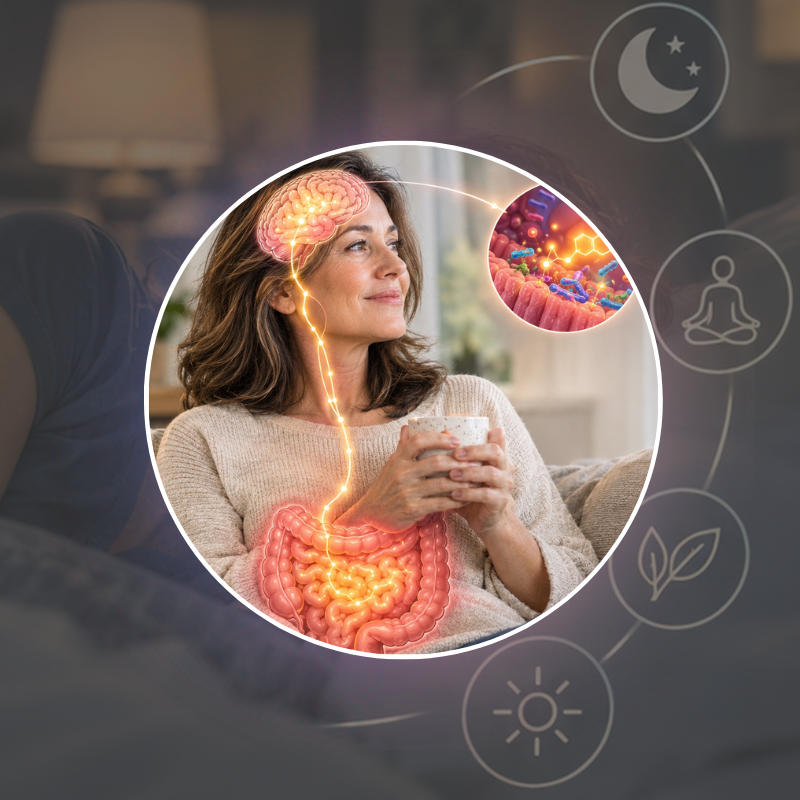
Ninety Percent of Your Serotonin Lives in Your Gut.
Gut health is one of those topics that has been thoroughly colonised by the wellness industry and somewhere in between the probiotic powder ads and the 47-step gut reset programmes, the actual science got a bit lost. Over a decade ago due to family health issues I became obsesses with Michael Mosely and started to read his books on the microbiome and things that affect it and the huge significance it has in our overall health.
Your gut contains approximately 500 million neurons, its own independent nervous system called the enteric nervous system. It communicates with your brain via the vagus nerve in a bidirectional relationship but here's the bit that should make you put down whatever you're snacking on as roughly 90% of the communication travels from gut to brain, not the other way around.
Your gut is not passively receiving instructions from your brain. It is actively sending information upward. What happens in your gut shapes your mood, your stress response, your cognitive function and your emotional state…. constantly, in real time.
Neuroscientist Andrew Huberman discusses extensively how the gut-brain axis functions as a key regulator of autonomic nervous system states. The vagus nerve doesn't just relay gut sensations, it plays a direct role in regulating anxiety, emotional tone and even social behaviour. Which means 'gut feeling' is not a metaphor. It's a neurological data stream. Our gut lining is made of very similar cells to our brain….this is why gut instinct is more than just instinct.
The Serotonin Thing
When people think serotonin, they think brain. Mood. Depression. SSRIs. But approximately 90-95% of your body's serotonin is produced in the gut, specifically by enterochromaffin cells in your gut lining, regulated in part by your gut microbiome.
It has now been proven that gut bacteria) are directly involved in stimulating serotonin production in the gut. Disrupt those bacterial populations and you disrupt serotonin synthesis which then affects gut motility, pain sensitivity and your mood and anxiety levels.
Your microbiome is actively participating in your neurochemistry.
What Stress Does to Your Gut
Here's where burnout and gut health collide in a fairly spectacular fashion. When your stress response activates, your body does a predictable triage in that resources are diverted to the systems that help you survive the immediate threat. Digestion which is non-essential in a crisis gets significantly downgraded.
Chronically activated stress response means chronically downgraded digestion. Blood flow to your gut reduces. Digestive enzyme production drops. Gut motility changes (hello, alternating between slow and sudden urgency which is the IBS pattern many stressed women know intimately). The gut lining itself can become more permeable under chronic stress, a state sometimes called increased intestinal permeability allowing bacterial products to move into the bloodstream and trigger systemic inflammation.
Many studies clearly prove now that psychological stress is associated with significant changes in gut microbiome composition, reduced microbial diversity and increased intestinal permeability markers. Not occasional stress. Chronic, sustained, burnt out stress that builds over time.
So the bloating, the IBS, the 'my stomach is wrecked' feeling that many women in burnout describe is not separate from the burnout but part of the whole picture.
Source: Gut (2011) — Psychological stress and gut microbiota composition.
Perimenopause and the Gut
Oestrogen has receptors throughout the gut. When oestrogen levels decline in perimenopause, gut microbiome composition changes and studies have found that perimenopausal and postmenopausal women show reduced microbial diversity compared to premenopausal women, with shifts in specific bacterial populations that influence oestrogen metabolism, inflammation and gut motility.
There's also a specific subset of gut bacteria called the estrobolome which are responsible for metabolising and recirculating oestrogen. When the estrobolome is disrupted (by antibiotic use, poor diet, chronic stress), oestrogen metabolism becomes less efficient, which exacerbates hormonal symptoms. The gut-hormone-brain triangle is a three-way conversation and has a HUGE affect on our daily lives.
Source: mBio (2019) — The estrobolome: gut microbiota and oestrogen metabolism.
Alcohol and the Gut
Alcohol is one of the most well-documented disruptors of gut microbiome health. Research shows that regular alcohol consumption significantly reduces microbial diversity, increases intestinal permeability and promotes overgrowth of certain inflammatory bacterial strains (a state called dysbiosis).
This matters doubly in the context of the gut-brain axis. An alcohol-disrupted microbiome means disrupted serotonin synthesis, altered vagus nerve signalling and an amplified stress response, which then drives more craving for the thing that's creating the problem. The maladaptive coping loop has a significant gut health component that very rarely gets taken into the health evaluation.
What Actually Supports a Healthier Gut
The evidence base here is genuinely growing and refreshingly, a lot of what helps is not expensive.
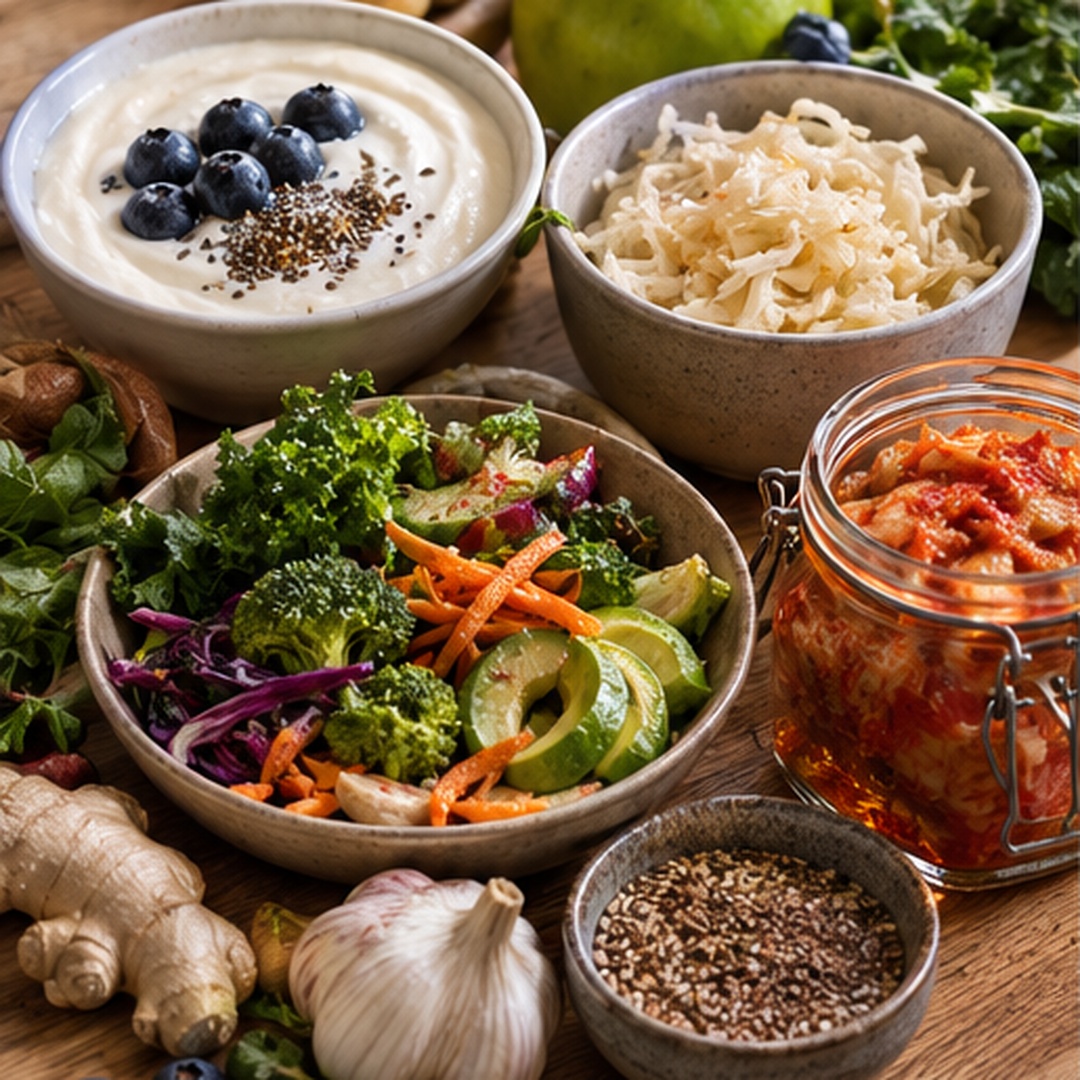
Dietary fibre, specifically diverse plant-based fibre, is the single most evidence-backed intervention for microbiome diversity. It is now recommended that we aim for 30 different plant foods per week (yes, different ones). It sounds like a lot. It's actually very achievable once you start counting things like garlic, onion, ginger etc
Fermented foods such as yoghurt, kefir, kimchi, sauerkraut, miso — have been shown in repetitively to increase microbiome diversity and reduce inflammatory markers more effectively than a high-fibre diet alone.
Reducing ultra-processed food (surprise surprise) has been consistently associated with reduced microbiome diversity and increased gut permeability.
Managing the stress response, not as a lifestyle aspiration but as a direct gut health intervention. Your microbiome responds to your nervous system state. Stress management is gut health management.
Sleep ….Poor sleep negatively impacts microbiome composition. Good sleep supports it. The systems are not operating in isolation.
Source: Cell (2021) — Gut-microbiota-targeted diets modulate human immune status (Wastyk et al., Stanford).
The gut is not a side character in the story of women's health in midlife. It is a central nervous system partner, a mood regulator, a hormonal processor and a stress responder, an all operating below the level of conscious awareness, all quietly influencing how you feel every single day.
So just for today – nourish your body and get good sleep. It’s not rocket science but understanding the importance of the correlations gives us much more motivation to aim on the right trajectory. Progress not perfection.
None of us got the manual.
Mez

Take the first step towards recovery
and book a free consultation with
Defrazzle Me today.
Let's Connect