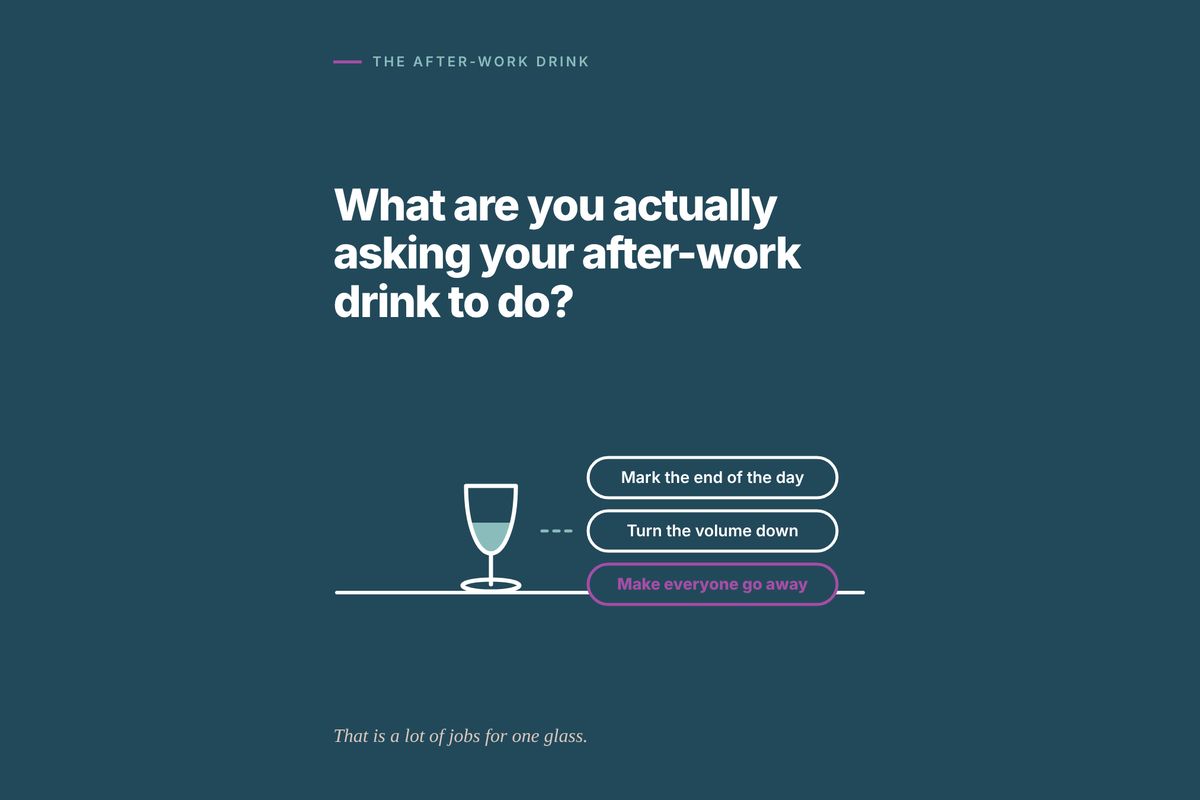
What are you actually asking your after-work drink to do?
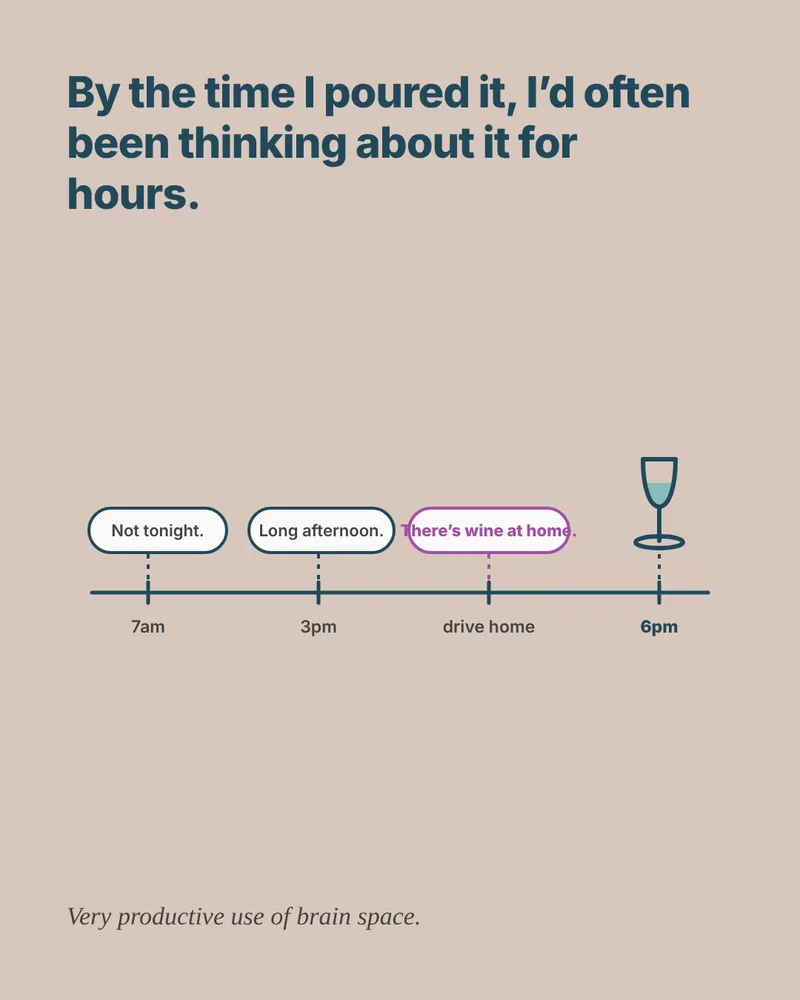
By the time I poured an evening drink, I’d often been thinking about it for a while.
Sometimes on the way home. Sometimes during a particularly tedious afternoon. Occasionally while having the morning conversation with myself about why I definitely wasn’t drinking that night.
Very productive use of brain space 🙃
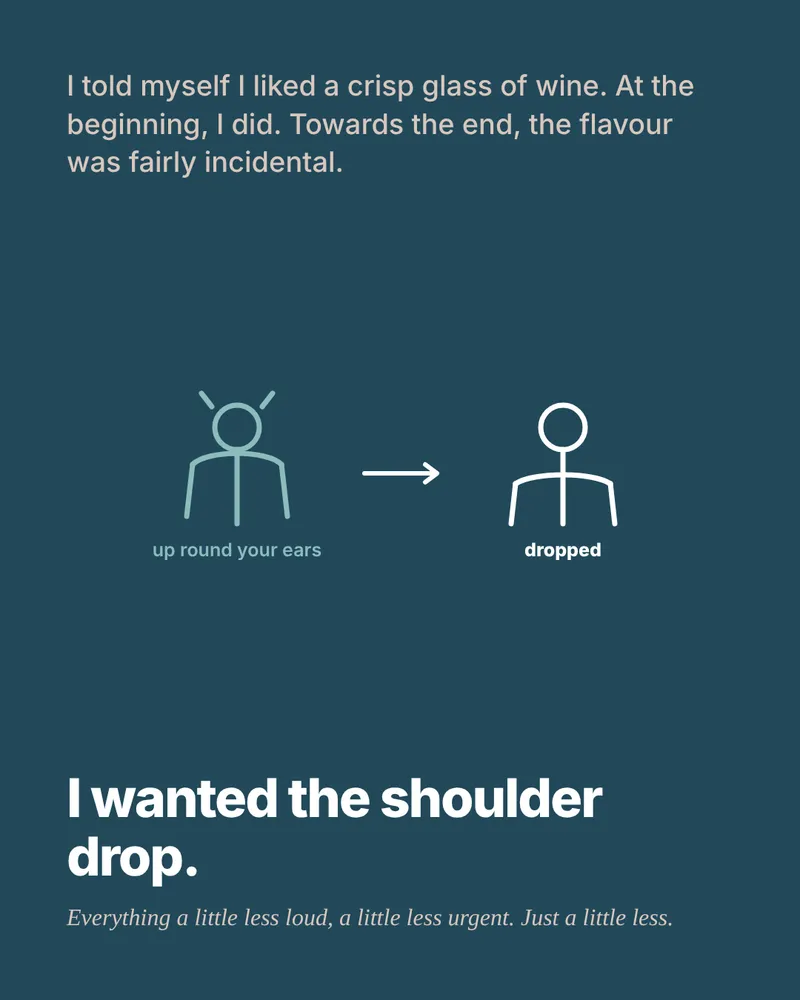
I told myself I liked a crisp glass of wine. And at the beginning, I did. But towards the end, the flavour was fairly incidental. What I really liked was the prospect of everything becoming a little less loud, a little less urgent, a little less agitating. Just a little less.
The responsibilities. The overthinking. The feeling that somebody, somewhere, was about to need another thing from me.
I wanted the shoulder drop.
And I had become very attached to the idea that the first drink was how that arrived, most effectively and immediately. My drinking habit had a few roles, and this is the part I think gets missed when we talk about our drinking habits.
We talk about quantities, not about the job the drink is doing
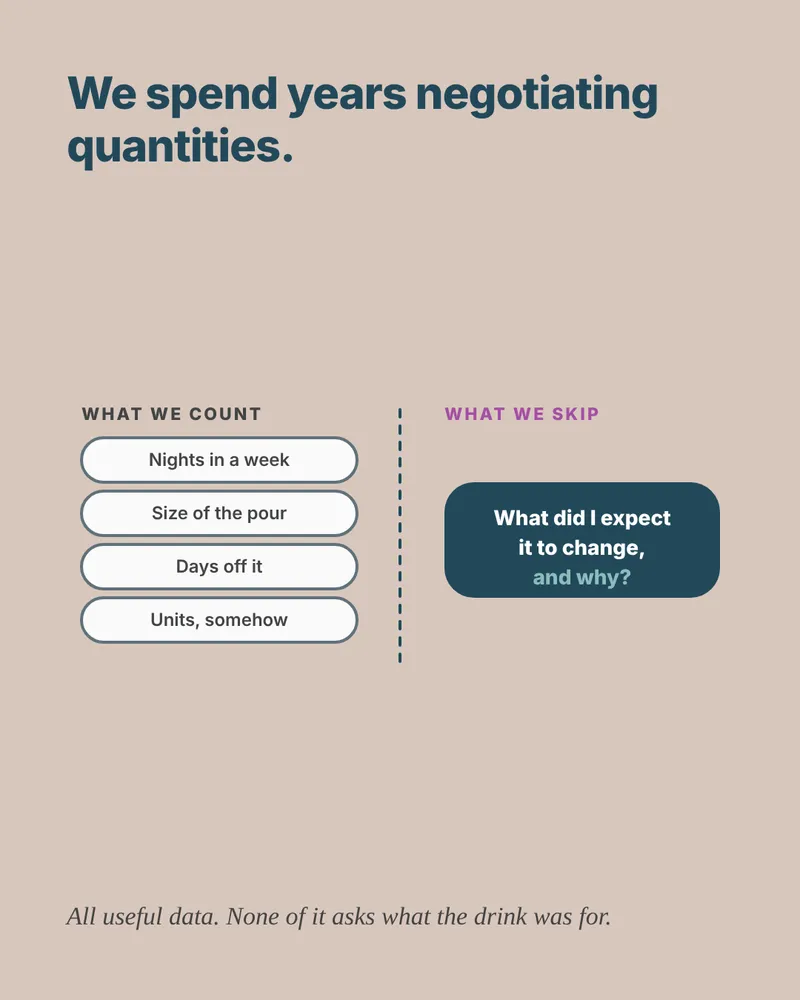
We spend plenty of time discussing quantities. How many nights in a week. How large the pour is. Whether we can socialise without thinking about drinking.
All very useful pieces of data. But I spent years negotiating quantities without properly examining what I expected alcohol to change, or why I found it a solution at all.
Was I hoping to feel calmer? More confident? Less bored? Less resentful about the number of invisible roles I took on to make sure a business and a family unit ran effectively? Was it the sign that the day’s responsibilities were closing out, a way to quieten everything down, or just a little relief?
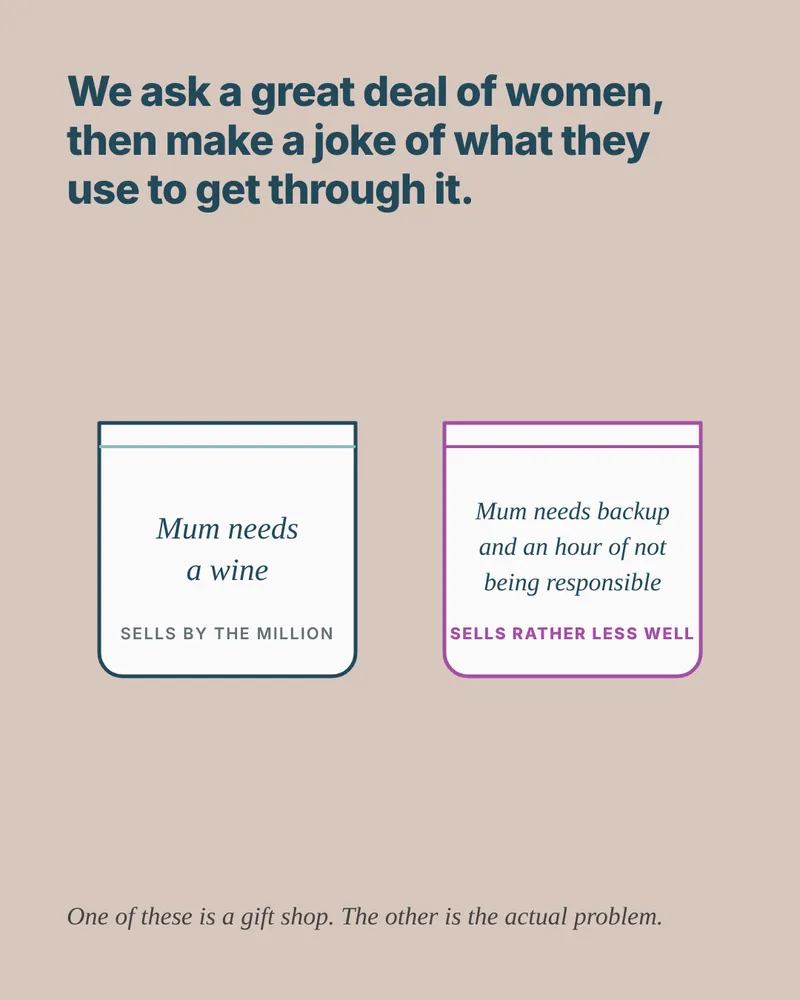
We ask a great deal of women, then make a joke out of the booze
“Mum needs a wine” is apparently suitable for a tea towel and a thousand TikTok accounts. “Mum needs some backup support and an hour without being responsible for everyone” is less commercially popular.
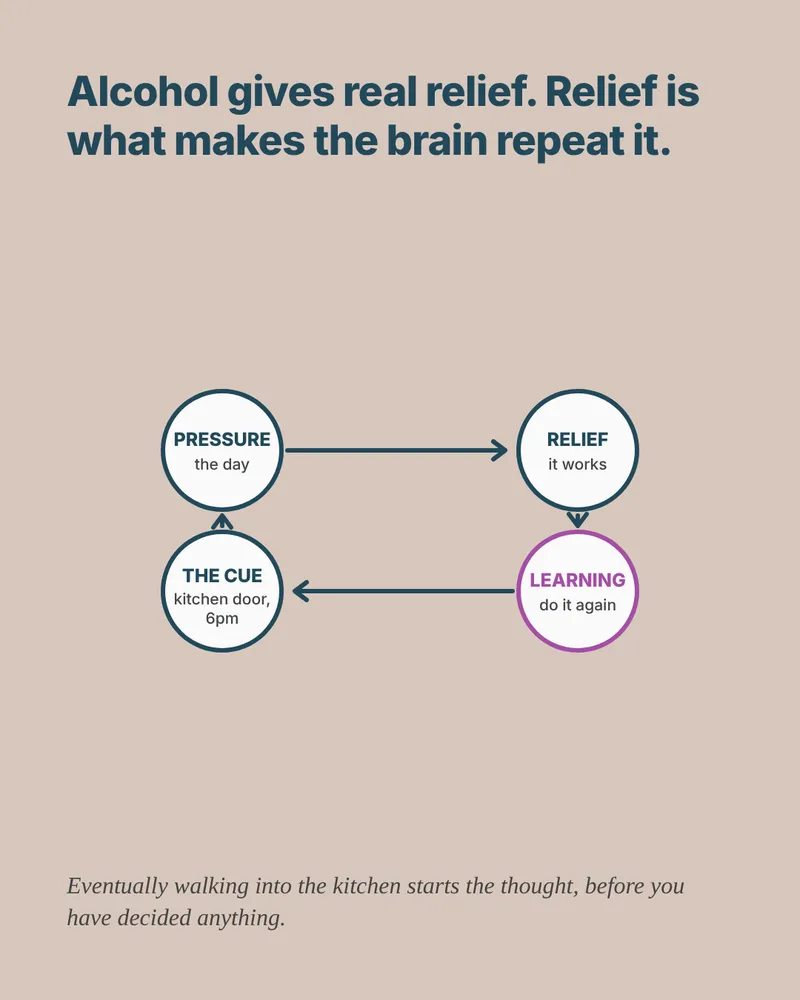
Alcohol can provide temporary relief — it is absolutely a major form of self-medication — and that relief reinforces the urge to repeat it, repetitively. Familiar places and routines become associated with drinking too. Eventually, walking into the kitchen or finishing work can instigate the thought of a drink before you have consciously decided to have one.
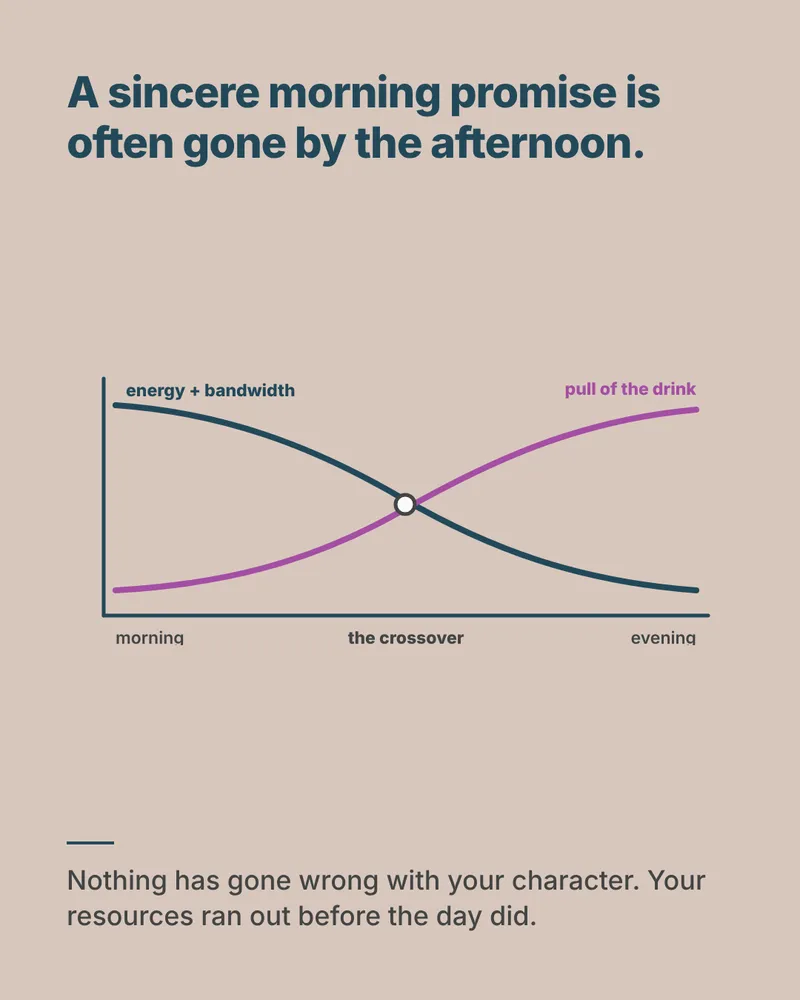
That helps explain why a sincere morning promise is often abandoned by the afternoon, when energy and bandwidth are low. And this is really useful to investigate if you want to create long-term change, rather than repetitively pulling apart our failing characters.
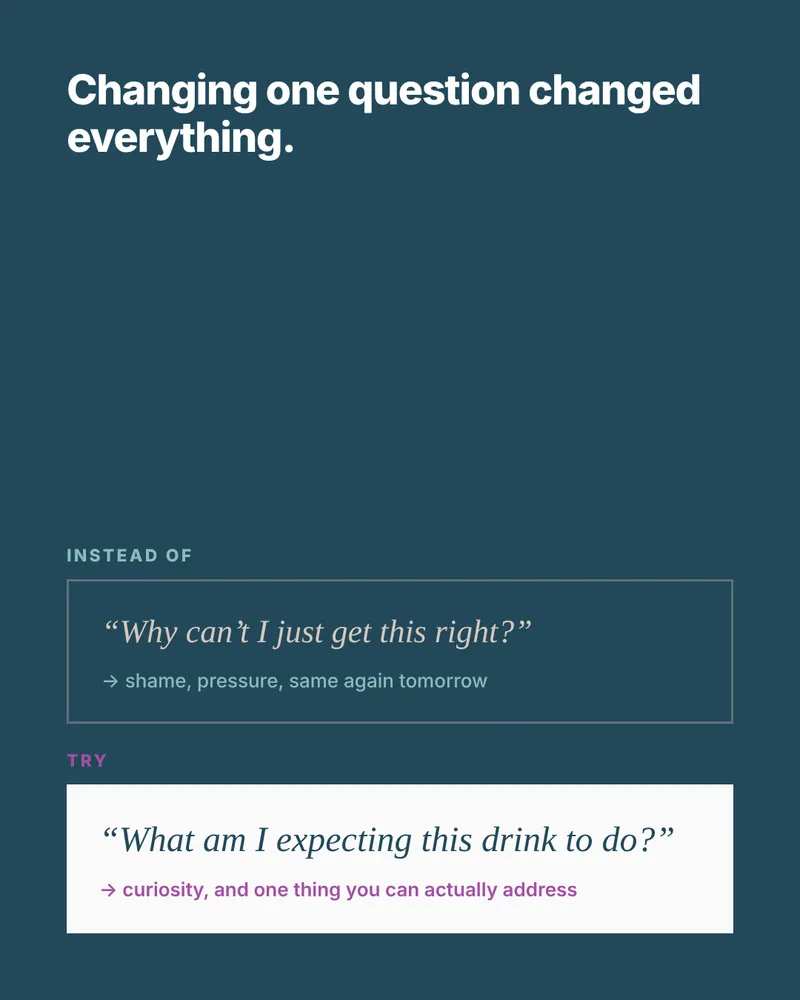
A better question than “why can’t I just get this?”
For me, “Why can’t I just get this…?” led to a drawn-out and exacerbated cycle of shame and additional pressure.
“What am I expecting this drink to do?” gave me a lot more curiosity, and the ability to start addressing things one at a time.
Try it on your own drinking hour
What happened just before the thought arrived? Have you walked through the door into another shift of work? Had a difficult conversation that evoked frustration, anger or disappointment? Finally sat down without being needed by someone or something?
Then ask yourself: what am I hoping will feel different after this drink?
Be completely honest with yourself. “I want everyone to leave me alone for a bit” is a super useful answer — although I didn’t think my thought patterns were ever that eloquent.
Once you know what you are looking for, you can consider what might actually help. A proper break. Something to eat. A conversation you have been avoiding. Someone else taking responsibility for dinner (LOL). Or being able to access a space to talk honestly about the things that are wearing you down.
You don’t have to pretend a bath will fix a life that’s burning you out
A walk or a cold shower may help you through a particular moment. Bigger problems might require bigger changes and professional support.
What you can do is start to examine the maladaptive behaviour. I only wish I had made this realisation a lot earlier than I did. In hindsight, I think by the time I reached that moment the drinking had become part of my identity and I wasn’t sure how to shed that skin. And to be honest, I didn’t firmly believe life could be that fun without it.
You can be capable, reliable and achieving a s**t load while privately feeling uncomfortable about the role alcohol has assumed in your life.
My only piece of advice is that if you are questioning it at all, pause on collecting any more evidence. Take a breath and re-evaluate before it catapults into a complete s**t show.
Start by getting very curious about what you actually need relief from. That answer will be the key to moving forward in any format.
Before you change anything: if you drink heavily or may be dependent on alcohol, speak with your GP before stopping suddenly, as withdrawal can be dangerous.
At Defrazzle Me, I help women understand these patterns and build other ways to respond to stress, overwhelm and uncomfortable feelings. I help women break the habit of drinking to cope, or using alcohol as an escape.


