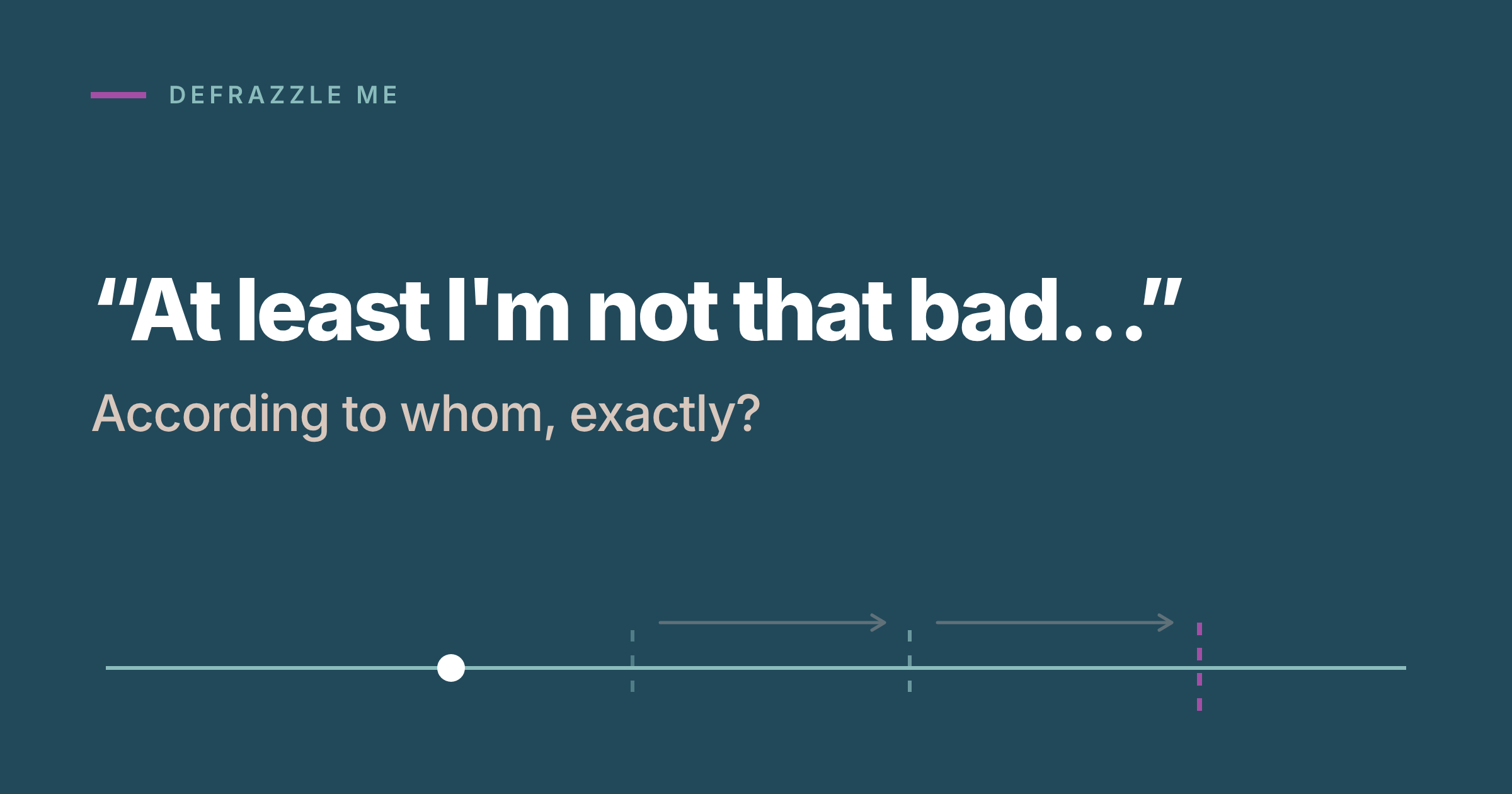
“At least I'm not that bad…” According to whom, exactly?
I'm an alcoholic. I always will be. But for years I had a very convincing argument that I wasn't, in that there were others who drank more. Case closed.
The evidence
I took my makeup off every night, swallowed an omega 3 and laid out my gym gear for the morning. You can't have a drinking problem if your activewear is already on the chair.
Clean sheets every week. No overdue library books. Bins out on time. The kids went to school with a decent breakfast. I met deadlines. Nobody was pulling me aside for a concerned chat (until later).
Honestly, what more did anyone want?
Each rule was broken
Meanwhile, I drank most nights. I relied on it to switch off. I'd tried to cut back at different stages, or change my strategies. Only on the weekends. Only organic wine. Only vodka and soda. Not at home. Over time each rule was broken. Stressful day. Hard week. Birthday. Tuesday. Cooking wine was never wasted.
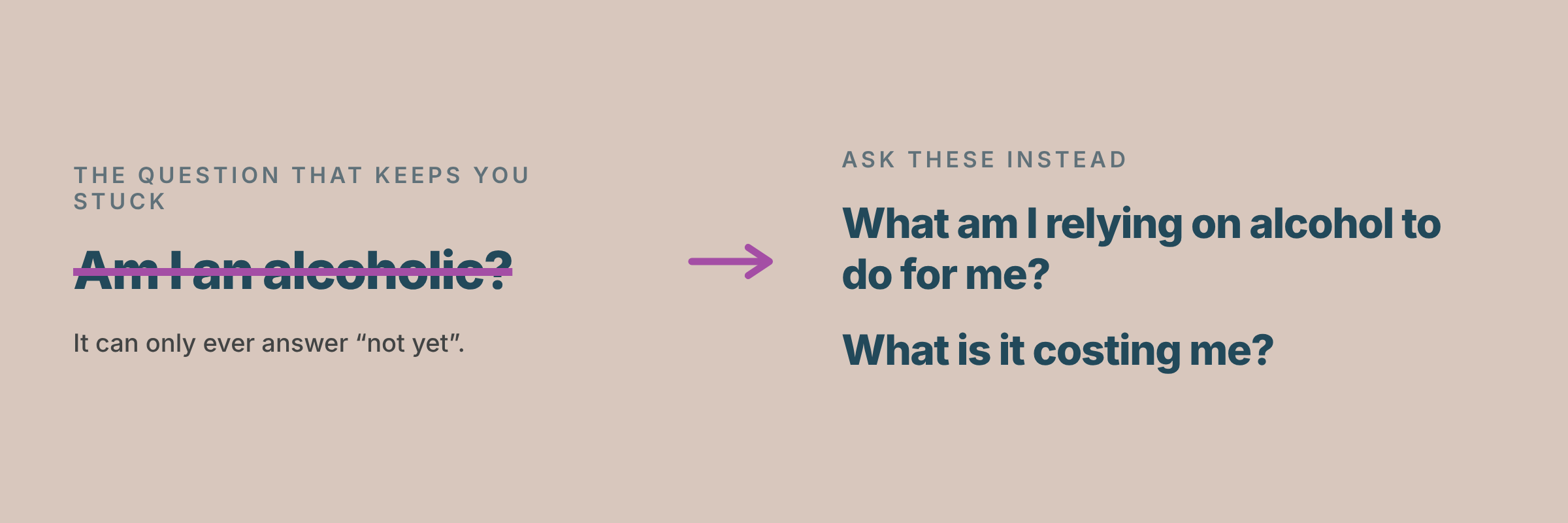
“Am I an alcoholic?” was a question I kept asking while rejecting any evidence I didn't like, or justifying each action.
Drinking most nights? Lots of people do.
Thinking about it all afternoon? It had been a hard day.
Unable to stick to the limit I'd set myself? Well, there was only a little left in the bottle.
A very efficient system
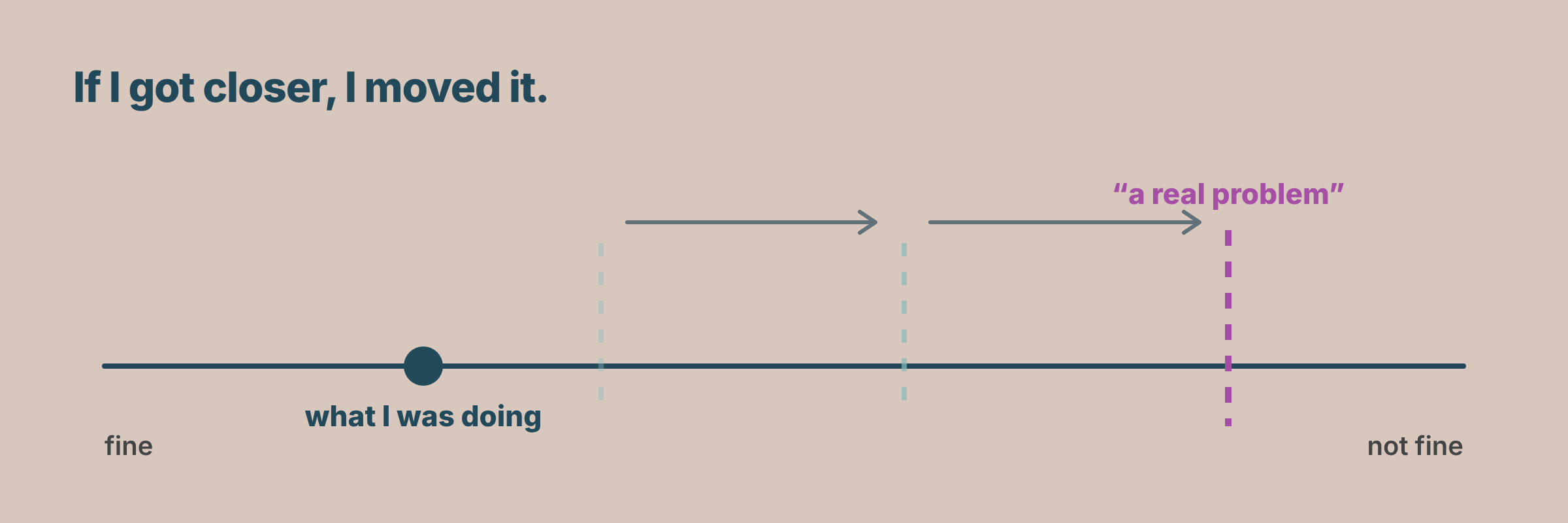
I had built an imaginary threshold for a drinking problem and put it somewhere safely beyond whatever I was currently doing. If I got closer, I moved it.
Very efficient. Because looking at maladaptive behaviour only causes more discomfort, and that is exactly why alcohol was working in the first place: to remove all discomfort and distress.
The grey area
That's what I recognise in so many of the women I work with. They're getting everything done, however they're tired of how much space drinking takes up, let alone how much time is wasted consuming it. They want something to change. Then there is always the moving goal posts: work drinks, Christmas, New Year's, a wedding, a funeral.
I'm comfortable calling myself an alcoholic now. It took me a long time to get there, however I had to be authentic and use my story to help others I see every day in the same cycle. Regardless of how much you drink, the bigger question is really this — what am I relying on alcohol to do for me? What is it costing me, including the things nobody else sees?
When I decide to drink less, what actually happens? For me it never happened. Same result in the end, night after night. The gym gear was on the chair and I would still get up religiously every morning swearing not to drink the next evening, and by 5pm I would open something.
That's the grey area. It's where most of the women I work with sit, and it's ridiculously hard to see from the inside.
“Am I an alcoholic?” is a terrible question
My opinion, for what it's worth. It sets the bar at a brown paper bag under a bridge, and almost none of us look like that. So we hold ourselves up against the stereotype, come out looking fine, and pour another. The question can only ever answer “not yet”, which is why so many of us stay stuck on it. And I can tell you it is a very slippery slope from not being one to being completely and absolutely one.
If you are serious about contemplating change, I believe firmly that being curious about whether drinking is adding anything to your life, or what it might be costing you, is a far more effective line of questioning.
It doesn't help that Australia drinks for every occasion going. New job, a drink. Bad day, a drink. Funeral, a drink. A kid's birthday party, for the love of god please a drink. Add the “mum needs a bubbles” memes and the ads full of effervescent women without a wrinkle to their name, and heavy drinking starts to pass for normal drinking.
The real numbers
The Australian guidelines say no more than 10 standard drinks a week and no more than 4 on any one day. A typical restaurant pour of wine, around 150ml, is about one and a half standard drinks. A 750ml bottle at 13% is about 7.7 standard drinks.
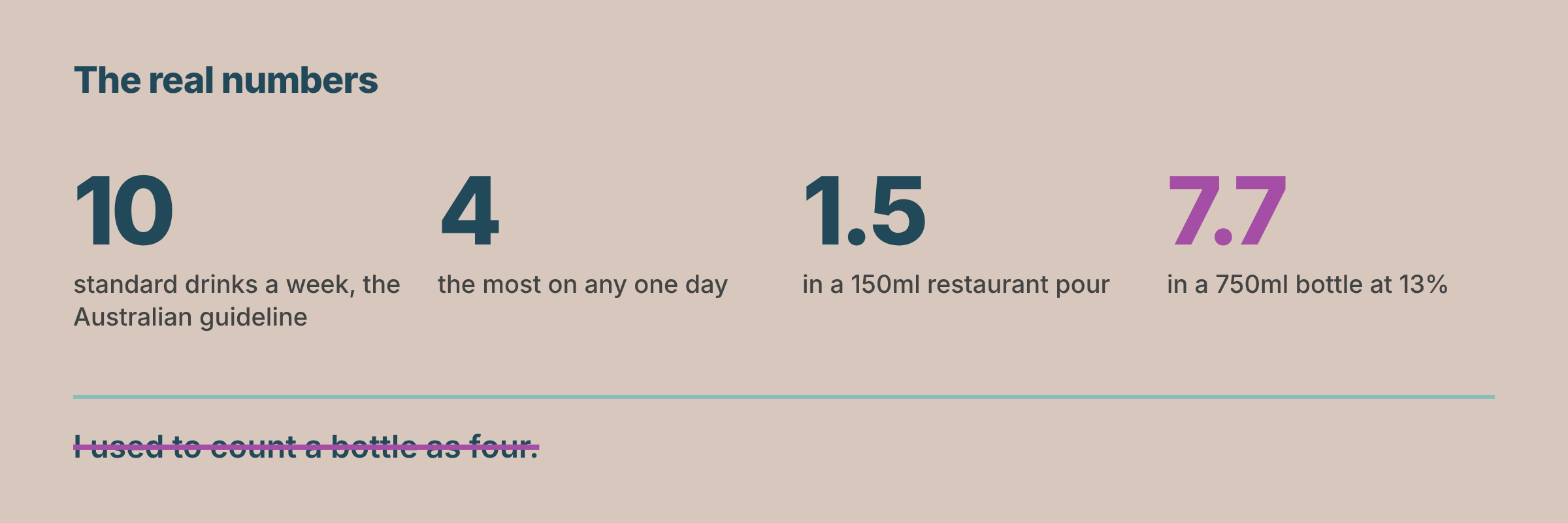
I used to count a bottle as four. I mocked standard glasses. When the cinema brought in the big glass pours as an option, it became a very attractive venue for me to locate.
Learning the real numbers stung a bit, I won't pretend otherwise. It also made every decision after that a lot more honest.
Your values, and the low hum
The other piece I look at with every woman I work with is her values. When the way you're living drifts away from what matters to you, it leaves a low hum of discomfort most of us don't even clock.
That looks different for all of us. You value health, and you swallow supplements each morning without examining why you feel a little rough. You value patience and kindness, but you're snappy because you aren't sleeping well. You value reliability, and you start to cancel events. You value your family, however you let work, wine and other events creep into family time.
Three questions for this week
Take some notes, even if it's on your phone.
What did I learn about drinking growing up?
What does my drinking actually give me?
What is it costing me? Sleep, mornings, patience, money, presence, growing resentment — whatever's true for you.
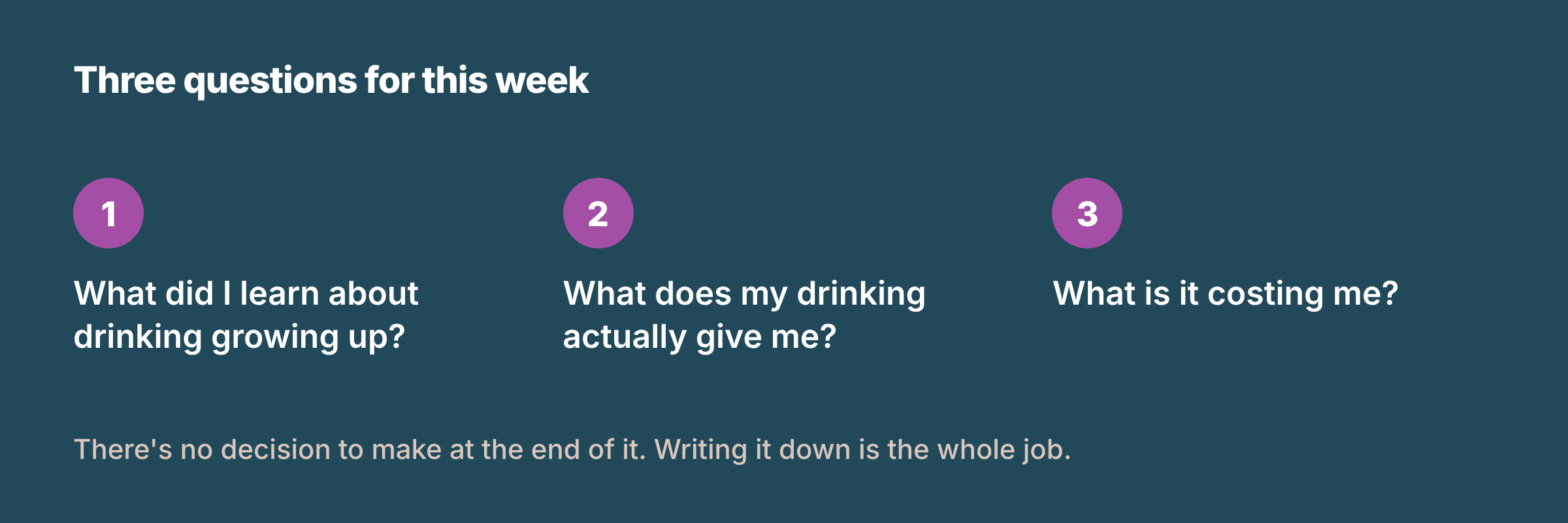
There's no decision to make at the end of it. Writing it down is the whole job this week.
If this sounds familiar, my free guide Not Alcoholic But Drinking Too Much? was written for exactly this space. Send us a message and we will shoot it back to you.
I'm not a doctor and this isn't medical advice, however a fair amount of education, training and a couple of decades of lived experience sit behind it.
None of us got the manual.


